- AI
- Startups
- Strategy
The "Wrapper Trap": Why Most AI Startups Won't Survive the Next Model Update
In every gold rush there's a difference between those selling shovels and those digging. The AI gold rush is no different.

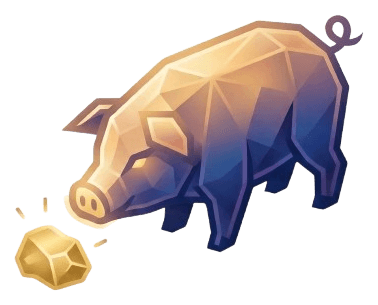
We are living through the "Gold Rush" phase of Artificial Intelligence. And just like any gold rush, there’s a difference between those selling shovels, those finding gold, and those just standing in the river hoping for a nugget.
Right now, the market is flooded with "AI Wrappers" — thin user interfaces slapped on top of major models and their chat APIs. They solve an immediate problem, sure. But they are terrifyingly fragile. One update from the vendor or slight price change, and their entire business model can evaporate overnight. If you are building in this space, you have to ask yourself: Are you building a business, or just a feature for someone else’s product?
To navigate this wave and build a sustainable PRODUCT rather than a temporary tool, we need to shift our analysis from "What can AI do?" to "Where does AI add compounding value?" Here are some use cases for moving beyond the wrapper.
1. The "Empty Chair" Test (Workflow vs. Chatbot)
Most wrappers operate as a chatbot: you ask, it answers. This is low-value because it requires constant human prompting. The Sustainable Shift: Move from Chat to Workflow. Don’t just write the email; read the incoming inquiry, draft the response, check the calendar for availability, and queue the draft for approval.
The Moat: Deep integration into the user's existing systems (CRM, Email, ERP). Once you are entangled in their daily workflow, you are much harder to replace than a browser tab.
2. The Proprietary Data Flywheel
If everyone has access to the same foundational models, the intelligence is a commodity. The Sustainable Shift: Your product must generate data that makes the model better for your specific users the more they use it.
The Moat: A legal tech product that gets smarter at reviewing NDAs every time a lawyer corrects its output has a defensible moat. A generic "summarize this PDF" tool does not.
3. Vertical Depth & "Last Mile" Accuracy
General models are getting better at everything, but they are rarely perfect at specific things. The Sustainable Shift: Pick a high-stakes vertical (Healthcare, Finance, Engineering, ...) and solve the "last mile" problem that general models ignore.
The Moat: Specialized compliance, hallucinations checks, and domain-specific formatting. A general model can write code; a sustainable product writes code that compiles within your company’s specific legacy architecture and security guidelines.
4. Agentic Action vs. Passive Generation
Wrappers generate text or images. Products take action. The Sustainable Shift: Build "Agents", not "answer-my-question" assistants.
The Moat: The value lies in the execution. An AI that can log in to a supplier portal and update an order is infinitely more valuable than an AI that just tells you to do it. The infrastructure required to do this reliably is a massive technical moat.
The Litmus Test for Founders
If OpenAI releases GPT-25 tomorrow with 10x better capabilities, ask yourself:
Scenario A: "Oh no, they just built my entire product as a free feature." (You built a wrapper).
Scenario B: "This is amazing! My product just became 10x more powerful and valuable to my customers." (You built a sustainable product).
The era of easy AI money is ending. The era of deep, sustainable AI products is just beginning. Let’s build things that last.